

Key Takeaways
- Homeowners’ insurance coverage is determined by what the fallen tree hits, not who owns the ground where the tree grew.
- Acts of God, including tornadoes, ice storms, and severe thunderstorms, generally trigger coverage under the affected property owner’s policy.
- Insurance policies usually exclude cleanup costs for trees that fall into an empty yard without striking an insured structure.
- Negligence overrides standard storm coverage; if a neighbor ignores a visibly dead tree, their insurance may be held legally liable.
- Keeping detailed maintenance logs and hiring certified arborists is the best way to prove tree health before an emergency strikes.
Oklahoma storms can become destructive with little warning. Tornadoes, straight-line winds, hailstorms, and winter ice frequently leave behind broken limbs, damaged roofs, and fallen trees blocking roads or crushing fences. After the storm passes, many homeowners immediately ask the same question: Who is responsible for paying for the damage?
The answer depends on several factors, including whether the tree was healthy, what it damaged, and whether negligence played a role. Many people assume the owner of the tree automatically pays for repairs, but insurance companies usually approach these situations differently.
The Main Rule Insurance Companies Follow
In most cases, homeowners’ insurance coverage is based on the damaged property rather than the location of the tree. If a healthy tree falls during a storm, the homeowner whose property was damaged generally files a claim with their own insurance company.
For example, if your neighbor’s healthy oak tree crashes onto your roof during severe winds, your homeowners’ insurance policy typically covers the repairs. Likewise, if your tree falls onto your neighbor’s garage during an ice storm, your neighbor’s policy usually handles their claim. Insurance companies consider the storm itself to be the direct cause of the damage rather than the property owner who planted the tree.
This surprises many homeowners because it feels unfair at first. However, from an insurance perspective, the weather event is classified as the primary cause of the loss.
When Homeowners Insurance Covers Fallen Trees
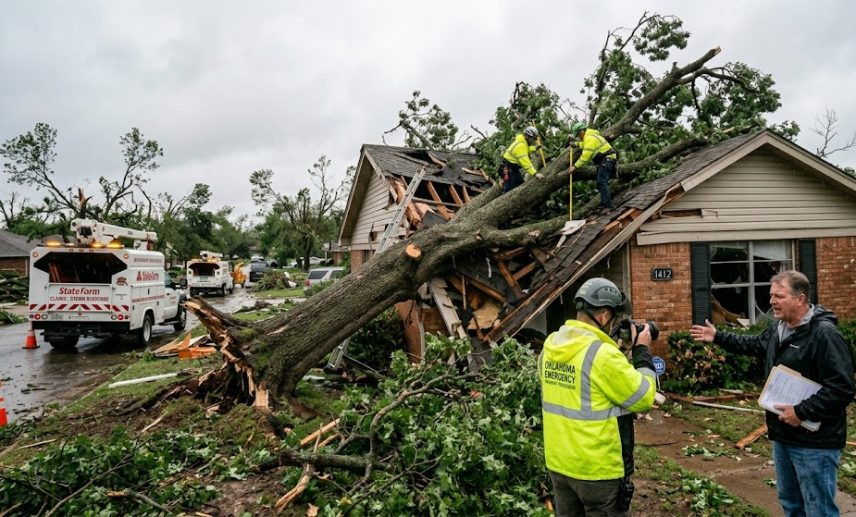
Most standard homeowners’ insurance policies provide coverage when a tree damages an insured structure during a covered weather event. Covered structures usually include the main house, detached garages, sheds, fences, and other permanent structures listed on the policy.
If a tree crashes into your home, insurance generally pays for structural repairs and the cost of removing the tree from the damaged area. Temporary emergency services, such as roof tarping or protecting exposed sections of the home from rainwater, may also be included.
Coverage usually applies when the damage results from windstorms, tornadoes, lightning, hail, or the weight of snow and ice. However, homeowners are still responsible for their deductible before insurance coverage begins.
When Insurance Does Not Cover Cleanup
One of the most frustrating situations occurs when a tree falls but misses every structure on the property. If a large tree collapses into the middle of your yard without hitting your house, fence, driveway, or shed, insurance companies often refuse to pay for removal.
Most homeowner’s policies are designed to protect structures rather than landscaping. Even if the fallen tree creates a dangerous mess or requires expensive equipment to remove, insurers may classify the situation as regular property maintenance instead of a covered emergency.
Some policies include limited tree debris removal coverage if the tree blocks access to the home or driveway. Even then, the reimbursement amount is usually modest. If the tree simply lands in an open yard, the homeowner often has to pay the cleanup costs out of pocket.
Healthy Trees vs. Negligence
The standard insurance rule changes when negligence is involved. Insurance companies make a clear distinction between healthy trees damaged by storms and dangerous trees that were ignored for long periods of time.
If a healthy tree snaps during a tornado or major windstorm, the incident is usually considered an unavoidable Act of God. In these situations, each homeowner relies on their own insurance policy. However, if a tree was visibly dead, hollow, leaning, cracked, or severely decayed before the storm, liability may shift to the property owner who failed to address the hazard. Insurance companies may investigate whether the owner ignored obvious warning signs that the tree posed a danger to nearby homes or vehicles.
Common warning signs include deep trunk cracks, fungal growth near the base, hollow cavities, exposed roots, severe leaning, or large dead limbs. If these problems existed long before the storm and no action was taken, the tree owner could potentially be held responsible for the resulting damage.
Proving Negligence
Negligence claims require evidence. Homeowners cannot simply claim a neighbor’s tree looked unsafe after the damage has already happened. Insurance companies usually require proof showing the property owner knew the tree was hazardous before it fell.
If you are concerned about a dangerous tree on a neighboring property, it is important to document the issue early. Photographs, written communication, and professional inspections can create a valuable paper trail.
Hiring an ISA-Certified tree service firm in Oklahoma to inspect the tree is one of the strongest steps a homeowner can take. A written arborist report identifying decay or structural weakness can become important evidence if the tree later causes damage. Sending concerns through email or certified mail also helps establish that the property owner was formally notified about the risk. Without documentation, insurance companies generally default to treating the incident as storm damage rather than negligence.
What Happens If a Tree Falls on a Vehicle?
Damage involving vehicles is handled differently from damage to homes. If a tree falls onto your car, the claim normally goes through your auto insurance policy rather than your homeowners insurance. To receive compensation for repairs, the vehicle owner usually needs comprehensive auto coverage. Drivers with liability-only policies are often responsible for covering their own repair costs after storm damage. This applies whether the vehicle was parked in a driveway, on the street, or in a parking lot at the time of the incident.
What To Do After a Tree Falls
If a tree crashes into your home during a storm, safety should always come first. Homeowners should immediately check for structural instability and leave the building if there is any danger of collapse. Emergency services should be contacted if power lines are involved or if there is a fire risk. Once everyone is safe, document the damage carefully with photographs and contact your insurance provider as soon as possible. Temporary measures such as roof tarping may help prevent additional water damage while waiting for repairs.
Avoid attempting large tree removal without professional assistance. Storm-damaged trees can shift unexpectedly and create serious safety hazards during cleanup.
Protect Your Property with Vision Tree Service
Preventative tree care is one of the best ways to reduce the risk of expensive storm damage in Oklahoma. Vision Tree Service provides professional tree removal, arborist, brush clearing, crown reduction, land clearing, stump grinding & removal, tree bracing, emergency tree service, tree cabling, tree care, tree debris removal, tree fertilization, plant health care, tree limb removal, tree trimming, wood chipping, tree pruning, and shrub trimming & removal throughout the OKC Metro area, including Oklahoma City, Edmond, and Nichols Hills.
Our team includes ISA Certified Arborists equipped to identify dangerous trees before they become major property hazards. Whether you need emergency cleanup after severe weather or routine maintenance to improve property safety, Vision Tree Service offers reliable and professional support for Oklahoma homeowners. Call Vision Tree Service at (405) 259-4838 to schedule a free estimate.
Frequently Asked Questions About Fallen Trees in Oklahoma
Does homeowners insurance cover fallen trees in Oklahoma?
Yes, homeowners insurance generally covers fallen trees if they damage a covered structure during a storm or other covered event.
What if my neighbor’s tree falls on my house?
Your homeowners insurance policy will usually handle the repairs first unless negligence can be clearly proven against the tree owner.
Will insurance pay if a tree falls in my yard in Oklahoma?
Most policies will not cover cleanup costs if the tree lands harmlessly in an open yard without damaging structures or blocking access.
What if a tree falls on my car?
Tree damage to vehicles is typically covered through comprehensive auto insurance rather than homeowners insurance.
Can I trim branches hanging over my property?
Yes. Oklahoma homeowners are generally allowed to trim branches or roots extending over their property line, but only up to the boundary line and without damaging the overall health of the tree.
How can I tell if a tree is dangerous?
Warning signs include deep trunk cracks, hollow cavities, mushrooms near the base, leaning trunks, exposed roots, and large dead branches. A certified arborist can confirm whether the tree poses a serious risk.
What should I do immediately after a tree hits my house?
Make sure everyone is safe, avoid damaged areas, document the damage with photos, contact your insurance provider, and call a professional tree service for emergency removal.
Does homeowners insurance replace the actual tree?
Most policies do not fully cover replacing landscaping trees after storm damage. Some may provide limited reimbursement under specific circumstances.
What is subrogation in a fallen tree insurance claim?
Subrogation occurs when your insurance company pays for your repairs first and then seeks reimbursement from another party’s insurance provider if negligence can be proven.
Summary Checklist: When to Call for Removal
| Condition | Risk Level | Recommended Action |
| Sudden Leaning | Critical | Call for emergency assessment immediately |
| Large Trunk Cracks | High | Schedule a professional inspection right away |
| Mushrooms or Fungus at the Base | Moderate to High | Inspect for internal decay and structural weakness |
| Dead or Bare Branches | Varies | Consult an arborist to determine if pruning or removal is needed |
| Overhanging Power Lines | High | Contact a licensed tree service for safe clearance |
Final Advice
Oklahoma storms are notoriously unpredictable and destructive, meaning a hazardous tree can turn into a major financial and legal liability in an instant. Understanding how insurance coverage operates is vital, but taking preventative action is the best way to safeguard your home and family. Waiting for severe weather to expose a structurally compromised tree frequently results in costly property damage and stressful disputes over liability. By proactively identifying structural defects such as deep trunk splits, fungal growth, or severe leaning, you can address risks before a major failure occurs.
Partnering with a reliable ISA-Certified tree service firm in Oklahoma tree specialists ensures your property remains safe, clear of debris, and resilient against severe weather. If you suspect a tree on your property poses a danger, do not wait for the next storm to force your hand. For expert care, comprehensive hazard assessments, and reliable emergency tree services across the OKC Metro area, Book Your Free Estimate with Vision Tree Service to protect your investment and secure peace of mind.